
 Hey! Welcome to my blog! You can take some time to get to know me by reading posts under the "Who Am I?" category or you can just get started by reading topics you would like to learn about.
After stepping down from his judgment seat, Alma first decided to cleanse the church in Zarahmela, the capital city of the Nephites. He begins by establishing his own authority:
“I, Alma, having been consecrated by my father, Alma, to be a high priest over the church of God, he having power and authority from God to do these things, behold, I say unto you that he began to establish a church in the land which was in the borders of Nephi; yea, the land which was called the land of Mormon; yea, and he did baptize his brethren in the waters of Mormon” (Alma 5:3).
Why is important for Alma to establish his authority? “We believe that a man must be called of God, by prophecy, and by the laying on of hands by those who are in authority, to preach the Gospel and administer in the ordinances thereof” (Articles of Faith 1:5). In the kingdom of God, authority is very important. I’ve always liked the “Ice Cream Man” analogy.
 Imagine you are driving down the highway and you hear music behind you, you look in your rear view mirror to see an ice cream truck following you closely with the driver signaling you to pull over. You hesitantly pull over with the assumption that perhaps there is a good reason for this oddity. The ice cream vendor approaches your window, and hands you a piece of loose-sleeve paper with a crudely written assertation on it outlining that you owe the State a total of $250.00 for a traffic violation of speeding.
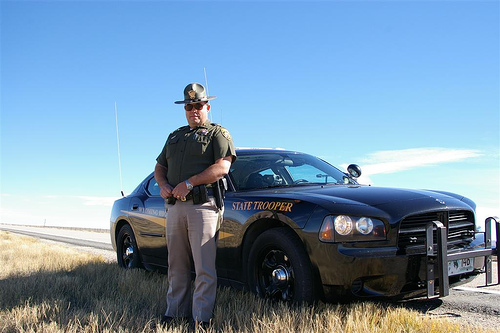 What would you do? Pay the fine? For some reason I doubt you would. And why wouldn’t you? Probably because the ice cream man has no authority from the State to issue citations. But if it were a State Trooper, who has that authority, the citation would be binding, and therefore any delinquency in paying the fine would create serious consequences.
Apply this to preaching the gospel. Preaching the Gospel is much more than sharing a testimony of truth, although that is part of it, there is much more involved. Preaching the Gospel means delivering a message on an errand from the Lord, making that person’s words binding (see Isaiah. 61:1; Jonah 3:2–10; Matt. 4:17; Mark 16:15).
I can’t just wake up one day and call myself to be a prophet and go out and start my own church and baptize in the name of the Lord. Well, I could, but it wouldn’t be under that sanction of God, because he didn’t call me to it. Christ condemns this kind of attitude as he concluded his sermon on the mount:
“Not every one that saith unto me, Lord, Lord, shall enter into the kingdom of heaven; but he that doeth the will of my Father which is in heaven.
“Many will say to me in that day, Lord, Lord, have we not prophesied in thy name? and in thy name have cast out devils? and in thy name done many wonderful works?
“And then will I profess unto them, I never knew you: depart from me, ye that work iniquity” (Matthew 7:21-23).
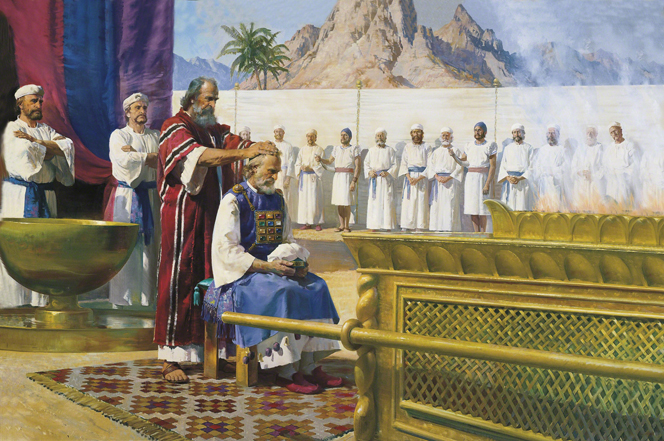 Furthermore the Apostle Paul states: “And no man taketh this honour unto himself, but he that is called of God, as was Aaron” (Hebrews 5:4). For further study on the calling of Aaron see Exodus 28:1; 40:13; see also Numbers 27:23).
After Alma establishes his authority to the people, they are ready to listen, and then in quintessential Alma form, he cites and brings to remembrance the captivity of his fathers:
“And behold, I say unto you, they were delivered out of the hands of the people of king Noah, by the mercy and power of God.
 “And behold, after that, they were brought into bondage by the hands of the Lamanites in the wilderness; yea, I say unto you, they were in captivity, and again the Lord did deliver them out of bondage by the power of his word; and we were brought into this land, and here we began to establish the church of God throughout this land also.”
“And behold, after that, they were brought into bondage by the hands of the Lamanites in the wilderness; yea, I say unto you, they were in captivity, and again the Lord did deliver them out of bondage by the power of his word; and we were brought into this land, and here we began to establish the church of God throughout this land also” (Alma 5: 4-6).
Why? Why does he start his address this way? Why does Alma want the people to remember that their fathers were in bondage, and then delivered? Well, why does Moroni, the son of Mormon, preface the most famous promise in the Book of Mormon by saying:
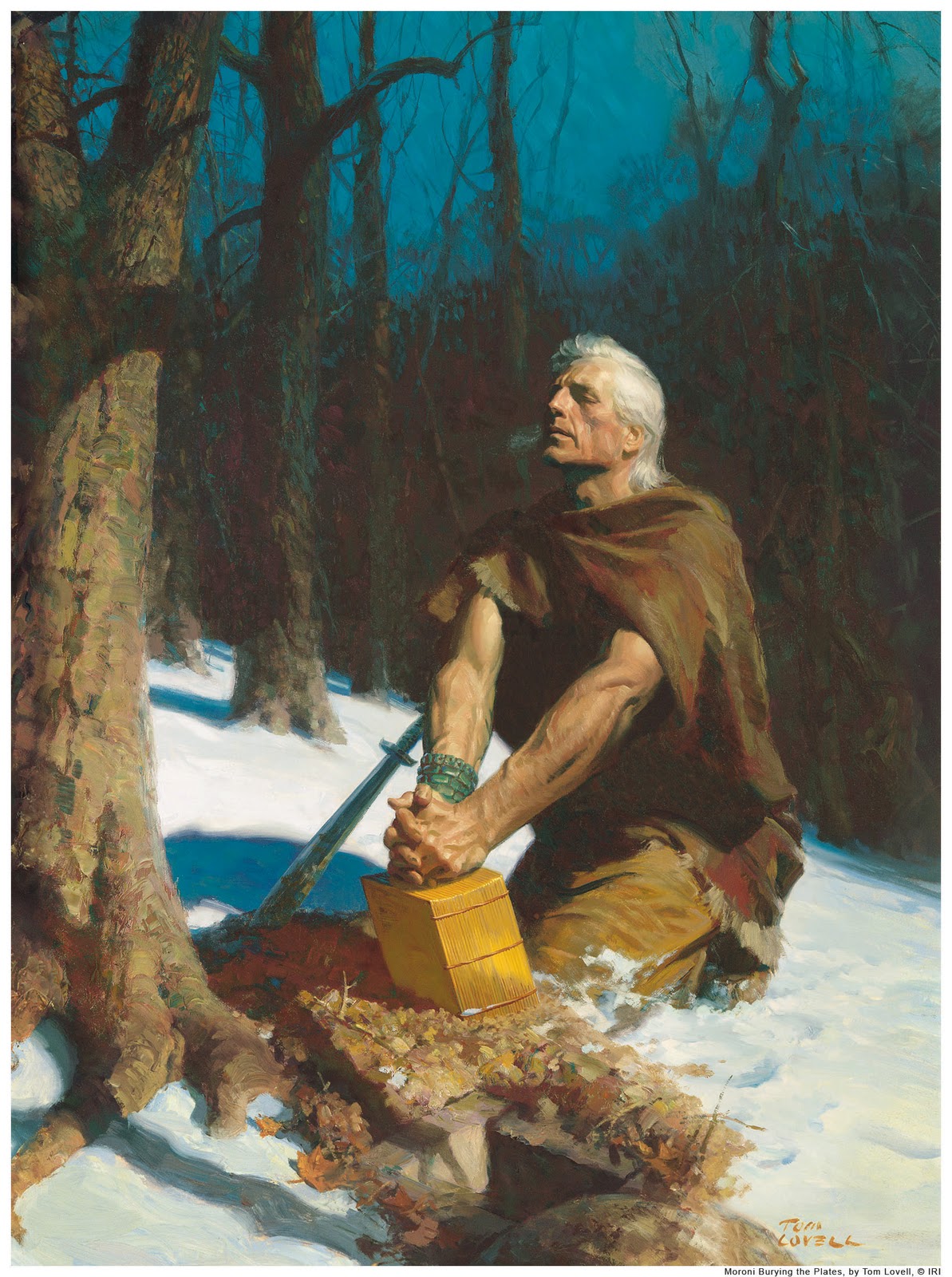 “Behold, I would exhort you that when ye shall read these things, if it be wisdom in God that ye should read them, that ye would remember how merciful the Lord hath been unto the children of men, from the creation of Adam even down until the time that ye shall receive these things, and ponder it in your hearts” (Moroni 10:3).
I don’t know. Unfortunately none of them are around anymore for us to ask. But, lucky for us, the one who inspired them to write their words is always there for us to ask. For me personally, when I think of these things—when I remember how merciful God has been to his children in delivering them from bondage—it prepares me to be instructed and to repent. How?
Well, it humbles me. It is always humbling to realize that man isn’t all that. Even our fathers, who we look up to as hero’s, not even they are perfect. When any of us are left to our own devices, we always fall our faces from time to time. But when we seek refuge from a loving Father in Heaven, we can so easily accomplish anything, “for with God all things are possible” (Mark 10:27).
I am reminded that I just can’t do much on my own. And the greatest, most paramount thing that I cannot do on my own—no matter how big of a boy I think I am—is make myself clean. As we remember the physical bondage or our parents, we are lead to ponder next of the captivity that is of a more spiritual nature—the enslavement to our sins, and the full weight of justice.
And so Alma continues:
“And now behold, I say unto you, my brethren, you that belong to this church, have you sufficiently retained in remembrance the captivity of your fathers? Yea, and have you sufficiently retained in remembrance his mercy and long-suffering towards them? And moreover, have ye sufficiently retained in remembrance that he has delivered their souls from hell?
“Behold, he changed their hearts; yea, he awakened them out of a deep sleep, and they awoke unto God. Behold, they were in the midst of darkness; nevertheless, their souls were illuminated by the light of the everlasting word; yea, they were encircled about by the bands of death, and the chains of hell, and an everlasting destruction did await them.
“And now I ask of you, my brethren, were they destroyed? Behold, I say unto you, Nay, they were not.
 “And again I ask, were the bands of death broken, and the chains of hell which encircled them about, were they loosed? I say unto you, Yea, they were loosed, and their souls did expand, and they did sing redeeming love. And I say unto you that they are saved.
“And now I ask of you on what conditions are they saved? Yea, what grounds had they to hope for salvation? What is the cause of their being loosed from the bands of death, yea, and also the chains of hell?
“Behold, I can tell you—did not my father Alma believe in the words which were delivered by the mouth of Abinadi? And was he not a holy prophet? Did he not speak the words of God, and my father Alma believe them?
“And according to his faith there was a mighty change wrought in his heart. Behold I say unto you that this is all true.
“And behold, he preached the word unto your fathers, and a mighty change was also wrought in their hearts, and they humbled themselves and put their trust in the true and living God. And behold, they were faithful until the end; therefore they were saved” (Alma 5:7-13; emphasis added).
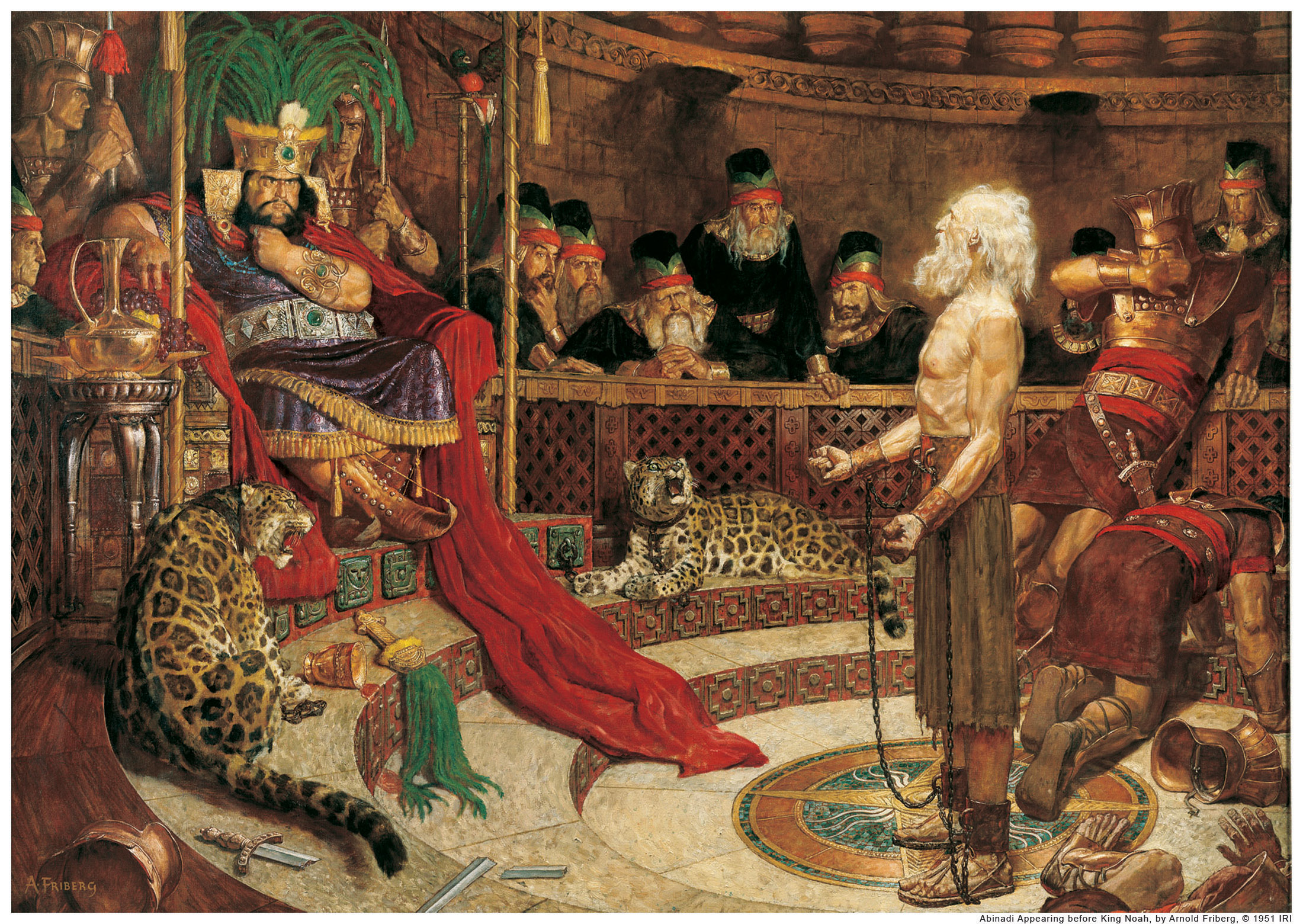 So we gather that this prophet Abinadi taught something that was so powerful that it caused even Alma, one of the most wicked of all the people, to have a mighty change wrought in his heart; a change so great that he preached those things to many and they also had faith in them and were saved. Well are you dying to know what was it actually was that Abinadi taught? It must have been something pretty awesome! Well, it was. However Alma doesn’t stop to recap the teachings of Abinadi in his address—probably because, to them, Abinadi’s teachings were as famous as in their day, as the Sermon on the Mount is famous in our day.
Let’s take snap shot of Abinadi’s prophesy so we can be as prepared as the people of Zarahemla for what Alma follows up with.
After recounting to the people the words of Isaiah (which we now have in our Holy Bible as Isaiah 53), he preached:
“I would that ye should understand that God himself shall come down among the children of men, and shall redeem his people.
“And because he dwelleth in flesh he shall be called the Son of God, and having subjected the flesh to the will of the Father, being the Father and the Son—
“The Father, because he was conceived by the power of God; and the Son, because of the flesh; thus becoming the Father and Son—
“And they are one God, yea, the very Eternal Father of heaven and of earth.
“And thus the flesh becoming subject to the Spirit, or the Son to the Father, being one God, suffereth temptation, and yieldeth not to the temptation, but suffereth himself to be mocked, and scourged, and cast out, and disowned by his people.
“And after all this, after working many mighty miracles among the children of men, he shall be led, yea, even as Isaiah said, as a sheep before the shearer is dumb, so he opened not his mouth.
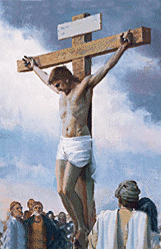
“Yea, even so he shall be led, crucified, and slain, the flesh becoming subject even unto death, the will of the Son being swallowed up in the will of the Father.
“And thus God breaketh the bands of death, having gained the victory over death; giving the Son power to make intercession for the children of men—
“Having ascended into heaven, having the bowels of mercy; being filled with compassion towards the children of men; standing betwixt them and justice; having broken the bands of death, taken upon himself their iniquity and their transgressions, having redeemed them, and satisfied the demands of justice.
“And now I say unto you, who shall declare his generation? Behold, I say unto you, that when his soul has been made an offering for sin he shall see his seed. And now what say ye? And who shall be his seed?
“Behold I say unto you, that whosoever has heard the words of the prophets, yea, all the holy prophets who have prophesied concerning the coming of the Lord—I say unto you, that all those who have hearkened unto their words, and believed that the Lord would redeem his people, and have looked forward to that day for a remission of their sins, I say unto you, that these are his seed, or they are the heirs of the kingdom of God.
“For these are they whose sins he has borne; these are they for whom he has died, to redeem them from their transgressions. And now, are they not his seed” (Mosiah 15:1-12)?
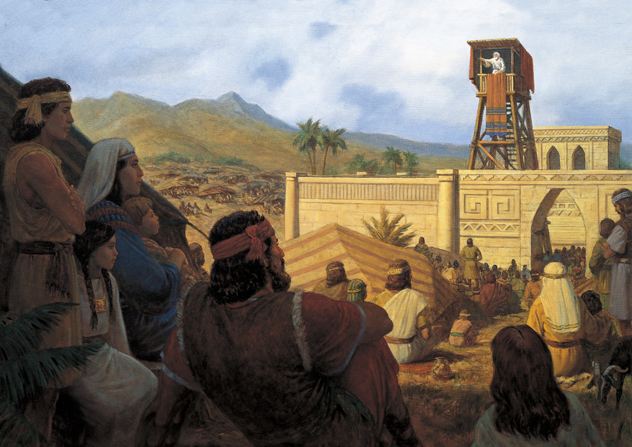
It pains me to only be able to share such a brief portion of these words. I get goose bumps every time I read them! Truly marvelous! For a more extensive study on Abinadi and his prophesies see Mosiah 11-17.
This is what caused Alma the Elder to tremble and to fear. These are the words that penetrated his heart causing him to have a mighty change of heart. It was the testimony of Jesus Christ, the Son of God who should come into the world and atone for the sins of his people. 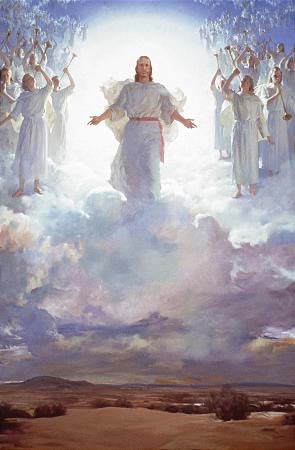 It was a knowledge that the Savior should extend the hand of mercy and meet the demands of justice for all those who are truly penitent and look forward with an eye of faith unto the Messiah.
These are the words and testimonies that this Alma the Elder taught the people, and their sons and daughters. These are the things that bring salvation and eternal life for all those who shall hearken unto them in times past, in times present, and in times to come. It is “only in and through Christ [man] can be saved” (see Mosiah 16:13).
My brethren and sisters, this testimony is what brings about a mighty change of heart. And what is this mighty change of heart? It is called repentance.
And it is that word that has forever changed my life. For when I learned what it was to truly be repentant, my frame began to shake at the thought of coming into the presence of my God. I thought of all my sins, and with a bright understanding of what it would be like to stand before my Maker—In all his glory and mercy— with my sins still in my heart, the very thought did wrack my soul with an inexpressible horror. Yes, I did borrow some words, but it is because I know them to be true, and they truly do reflect the way that I felt.
I had always thought, even in my better years, that repentance was this archaic word that represented a process of being forgiven: First we recognize what we do is wrong, second we stop doing the thing that we know is wrong, etc., etc… I am sure that process sounds familiar. I thought if I did those things, I was supposed to be forgiven, I was clear, safe, good.
 But I soon realized that this was not repentance. What I described is the “repentance process,” which is merely a tool that aids the individual that is truly trying to repent. “Repentance” and the “repentance process” are not the same thing. It is very possible that a person may confess their sin, stop their sin, make all the restitution necessary with man, and still not have repented of that sin! I did not know that. But through much study and soul searching I came to the conclusion that I was someone that was merely going through the motions, I was doing what I thought was required, but I was doing it for all the wrong reasons. Maybe I had done all that man required of me, but not what God requires. For God requires a broken heart and a contrite spirit (see 2 Nephi 2:7).
Now, this is what I learned. True repentance is having an attitude and disposition to no longer desire to offend God. Repentance means change. Repentance is most certainly a process, but it is not a structured one that can be measured by a check list. For someone like me real change comes through much pain and anguish of soul, not because we have to suffer for our sins, but because repentance isn’t about sin at all, it’s about attitude toward sin.
 Do you have a habit? Biting your nails, scratching your nose, blinking excessively, etc… Have you ever tried to stop doing it? I have, it is really hard. Trying to go one hour, let alone a day, or a week, or month, is nearly impossible for someone like me. Why is it so hard? Because I am so used to doing it, I do it without thinking. Trying to change what I do instinctively is one of the hardest things I have ever tried to do.
Now, apply that spiritually. I am a natural man. I am instinctively selfish, and want to do what I want to do. I don’t like to be told what I like is wrong. I don’t like to be told that I shouldn’t do it. I don’t like to give up what I like for other people. Those are my natural man instincts. So if trying to change little things that I do is so hard, imagine trying to change who I am. This is where the suffering comes from. It is a struggle and a battle every single day of my life to humble myself and try and think differently than I am used to.
Trying to change from “God, I don’t like this, but I’ll obey anyway cause if I dont I’ll be punished,” to “God I love this, it’s so easy to follow your command, please give me more hard things to do, cause I know it’s in my best interest.”
That, my brothers and sisters, is hard—at least for me it is. But that is what repentance is. That is why I suffer so much anguish of soul, because every day that I try and do that, I fail, and fail miserably. I know that I can never enter into the presence of God unless I have no sins to my name, and I no longer desire to commit those sins. It is so hard, it falls under the category of impossible.
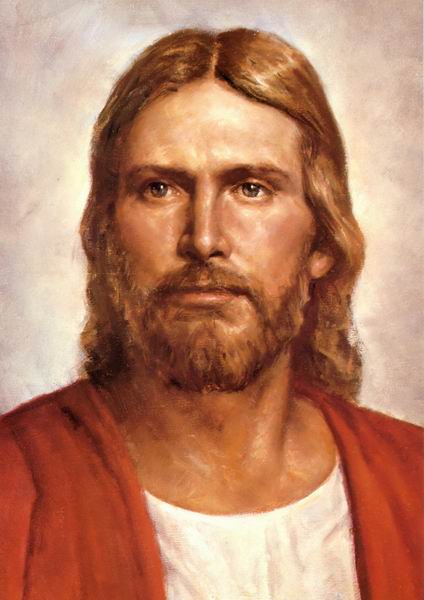 Now, this is why what Abinadi said is so powerful and enticing. What is impossible with a finite me, is very possible with an infinite Christ. I can enter into God’s presence but it’s not because I stopped sinning, because that won’t happen. It’s not because I have a perfect attitude about sin, because that won’t happen in this lifetime either. The reason why is because Christ paid the price for me, and his condition is that I simply don’t give up, that when I fail every day, I get back up the next day and I keep trying to change my attitude about sin and I do that because
  I desire to no longer offend God, and to follow him because I love him. This is repentance. It’s the day to day fight with our attitude about sin. It’s is a lifelong—and beyond—battle that will take your best efforts and determination.
It is the horse you never master the art of staying on. Thank Heavenly Father we aren’t judged on how well we stay on the horse, but how determined we are to keep trying.
Sigh. So what is to come? Well, Alma is going to test our repentance. He is going to ask some of the hardest hitting questions in all the scriptures. These are questions that are to be answered personally, and if you really are ready—honestly. These questions are the questions that will let you know where you stand in your own personal process of repentance—and your standing with God.
Stay tuned, because it’s only going to get better!

 Just Another LDS Voice