
 Hey! Welcome to my blog! You can take some time to get to know me by reading posts under the "Who Am I?" category or you can just get started by reading topics you would like to learn about.
 After Alma has softened the hearts of his listeners, he turns their attention away from remembering and leads them down a path of introspective soul-searching with a series of questions. If you remember, Alma just finished reminding the people of the conversion of their fathers. As you read the next verse, if you place some emphasis on the words in italics, it kind of changes the tone of the conversation a little.
“And now behold, I ask of you, my brethren of the church, have ye spiritually been born of God? Have ye received his image in your countenances? Have ye experienced this mighty change in your hearts” (Alma 5:14; emphasis added)?
In other words: “Our fathers were converted; how about you?” You can continue to read the rest of this section that way by placing emphasis, but, I’ll warn you, it’s kind of distracting. Instead, just know these are questions that we should be asking ourselves, not our brothers or neighbors or enemies. These questions are for me and for you.
It’s time to stop focusing on Alma and the people of Zarahemla and understand that these questions are for us. “Have I (Tim) been spiritually born of God? Have I received His image in my countenance? Have I experienced a mighty change in my heart?”
“Do ye exercise faith in the redemption of him who created you? Do you look forward with an eye of faith, and view this mortal body raised in immortality, and this corruption raised in incorruption, to stand before God to be judged according to the deeds which have been done in the mortal body” (Alma 5:15)?
I have asked myself that particular question many times. What would it be like if I were to stand before God this day knowing that my deeds and desires were going to ultimately determine where I spent eternity? 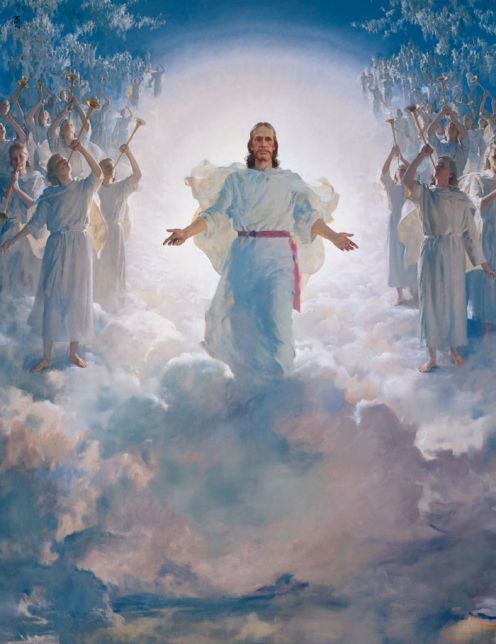 Would I feel comfortable in his presence, or would I “fain be glad if I could command the rocks and the mountains to fall upon me to hide me from his presence” (see Alma 12:14)? Do I hope for that day to come with faith in Christ? Or do I, in my terror, vainly wish that that day never comes? Alma continues:
“I say unto you, can you imagine to yourselves that ye hear the voice of the Lord, saying unto you, in that day: Come unto me ye blessed, for behold, your works have been the works of righteousness upon the face of the earth?
“Or do ye imagine to yourselves that ye can lie unto the Lord in that day, and say—Lord, our works have been righteous works upon the face of the earth—and that he will save you?
“Or otherwise, can ye imagine yourselves brought before the tribunal of God with your souls filled with guilt and remorse, having a remembrance of all your guilt, yea, a perfect remembrance of all your wickedness, yea, a remembrance that ye have set at defiance the commandments of God” (Alma 5:16-18)?
 Can you imagine? Whew! That is pretty heavy for anyone. If I were at the judgment bar of God, do I believe that the Lord would say unto me “Well done, good and faithful servant; thou hast been faithful over a few things, I will make thee ruler over many things: enter thou into the joy of thy lord” (see Matthew 25:23)? Or, if I haven’t really repented, do I think that I can hide my thoughts and desires from his all-searching eye?
That day will come. It is inevitable. So am I more caught up in getting what I want now, or am I more correctly concerned with becoming what I need to become in order to get what I want later? And what is it that I want? Do I want to be me now for all eternity? Do I wish that I could work iniquity forever and ever and God will just bend his rules to allow me to do all those things and still be in his perfect presence? Do I want God to agree with me, or do I want to agree with God? Do I trust God’s judgment more than my own? These are some interesting questions, and there are many more to ask. I won’t write all of them here, but the point is when we start asking the questions that Alma asks us, we then start to ponder on them and many more questions will arise. And that’s great because as we answer these questions honestly, we can know where we stand now and, therefore, we know what we can improve on.
 If I would rather God agree with me than the other way around, there are some serious flaws in my knowledge and judgment. Why would I want an omnipotent being with perfect reasoning, understanding, and perspective to change to fit into what I, a mere mortal, think I want?
  That’s both selfish and childish. I thought we were commanded to be child-like, not childish (see Mosiah 3:19)! So on that note, maybe I would do well to study the scriptures and pray to find out how to fix myself because surely I shouldn’t try to fix God, who is already perfect. This is just the beginning of why I love this discourse. Let’s move on.
“I say unto you, can ye look up to God at that day with a pure heart and clean hands? I say unto you, can you look up, having the image of God engraven upon your countenances?
“I say unto you, can ye think of being saved when you have yielded yourselves to become subjects to the devil?
“I say unto you, ye will know at that day that ye cannot be saved; for there can no man be saved except his garments are washed white; yea, his garments must be purified until they are cleansed from all stain, through the blood of him of whom it has been spoken by our fathers, who should come to redeem his people from their sins.
“And now I ask of you, my brethren, how will any of you feel, if ye shall stand before the bar of God, having your garments stained with blood and all manner of filthiness? Behold, what will these things testify against you?
“Behold will they not testify that ye are murderers, yea, and also that ye are guilty of all manner of wickedness?
“Behold, my brethren, do ye suppose that such an one can have a place to sit down in the kingdom of God, with Abraham, with Isaac, and with Jacob, and also all the holy prophets, whose garments are cleansed and are spotless, pure and white?
“I say unto you, Nay; except ye make our Creator a liar from the beginning, or suppose that he is a liar from the beginning, ye cannot suppose that such can have place in the kingdom of heaven; but they shall be cast out for they are the children of the kingdom of the devil.
“And now behold, I say unto you, my brethren, if ye have experienced a change of heart, and if ye have felt to sing the song of redeeming love, I would ask, can ye feel so now” (Alma 5:19-26)?
 If I have felt the redemption that comes through the mercy of the Lord Jesus Christ, ever, can I feel so now, or have I lost feeling through transgression and sin? Do I feel the Spirit operating in my life, guiding and supporting me, or do I believe that I am improving my circumstances on the strength of my own arm?
The Nephites, as all men are, were easily prone to forget—perhaps another reason that Alma may have started his address by helping us remember. Throughout the history of the Nephites, there is an ongoing cycle that appears often in the narrative of the Book of Mormon that many refer to as the “Pride Cycle” or, as I call it, the “Forget Cycle.” Mormon lived in a time where the Nephites had completely forgotten the Lord their God even in the very hour in which they were delivered. The cycle I am referring to goes a little something like this:
- Nephites are righteous; they are protected and prospered by the Lord.
- They are blessed abundantly and become a rich people, pride sets in, and they begin to forget the Lord.
- Wars and contentions arise and divide the people; the Lamanites or Gadianton Robbers scourge the Nephites.
- The Nephites are brought into the depths of humility and call upon God for help; in the Lord’s time, he hears their cries and delivers them. The cycle starts over.
Which part of the cycle am I in? Can I feel the love of God now? Or maybe I’m starting to forget the good feelings that I felt before. Well, I am a witness that it isn’t that hard to go from step one to step two. Unfortunately, it is actually quite easy.
Mormon states it so well: “Thus we see how quick the children of men do forget the Lord their God, yea, how quick to do iniquity, and to be led away by the evil one” (Alma 46:8).
Let’s keep going with Alma’s questions:
“Have ye walked, keeping yourselves blameless before God? Could ye say, if ye were called to die at this time, within yourselves, that ye have been sufficiently humble? That your garments have been cleansed and made white through the blood of Christ, who will come to redeem his people from their sins?
“Behold, are ye stripped of pride? I say unto you, if ye are not ye are not prepared to meet God. Behold ye must prepare quickly; for the kingdom of heaven is soon at hand, and such an one hath not eternal life.
“Behold, I say, is there one among you who is not stripped of envy? I say unto you that such an one is not prepared; and I would that he should prepare quickly, for the hour is close at hand, and he knoweth not when the time shall come; for such an one is not found guiltless.
“And again I say unto you, is there one among you that doth make a mock of his brother, or that heapeth upon him persecutions?
“Wo unto such an one, for he is not prepared, and the time is at hand that he must repent or he cannot be saved!
“Yea, even wo unto all ye workers of iniquity; repent, repent, for the Lord God hath spoken it (Alma 5: 27-32; emphasis added)!
 I don’t know about you, but I am not yet stripped of pride or envy, and I still make a mock of my brother from time to time. So am I prepared to enter God’s presence? No way. It’s pretty clear “such an one is not found guiltless.” How then can I be saved?
“Do ye suppose that ye shall dwell with [God] under a consciousness of your guilt? Do ye suppose that ye could be happy to dwell with that holy Being, when your souls are racked with a consciousness of guilt that ye have ever abused his laws?
“Behold, I say unto you that ye would be more miserable to dwell with a holy and just God, under a consciousness of your filthiness before him, than ye would to dwell with the damned souls in hell” (Mormon 9:3-4).
 The key here is that we are never going to be worthy of and feel comfortable in God’s presence. That is unless we are washed clean through the atoning blood of Christ. If we are continually repenting and humbling ourselves before the Lord, we can be guilt free. We can look up to God with “a pure heart and clean hands.” We would feel “happy to dwell with that holy Being.” It is all made possible as we put our faith in Christ and turn our will over to the Father.

 Just Another LDS Voice