
 Hey! Welcome to my blog! You can take some time to get to know me by reading posts under the "Who Am I?" category or you can just get started by reading topics you would like to learn about.
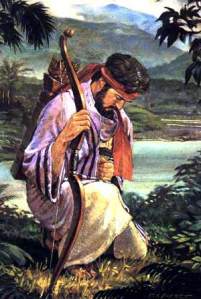 My Brethren and Sisters of the Church, I would like to address you with all the humility of my soul. I have been impressed upon by the Holy Spirit to expound upon the words of Alma that he gave to the members of the church at Zarahemla. This address has sunk deep into my heart, even as the words of Jacob sunk into the heart of his son Enos, which caused him to plead before his Maker for a remission of his sins (see Enos 1).
I share in the feelings of the prophet Omni as he stenciled his personal introduction: “I of myself am a wicked man, and I have not kept the statutes and the commandments of the Lord as I ought to have done” (Omni 1:2). I am nothing more than a man with an errand of the Lord to share my feelings. As I studied the words in the fifth chapter of Alma, my testimony increased that they truly are the words of Christ, and are most plain and precious to those who hearken unto the voice of the Master.
As this is a preface, you will find nothing from Alma 5 here, but I want to paint the picture of what is in Alma 5 by sharing with you what is so special about this particular address, the one giving it, and its backdrop.
First, let’s talk about who Mormon is. It’ll make sense in a minute; bear with me. He is the one that The Book of Mormon is named after; although Mormon isn’t the sole writer of the Book, it bears his name because of how it came to be. Under the direction of God, Mormon worked from a library of records and compiled and abridged them; he determined what exactly would be most important to its future readers. When he was finished with his work, he wrote his own account, and just before he died he commanded that his son Moroni preserve the record until the day he himself died.
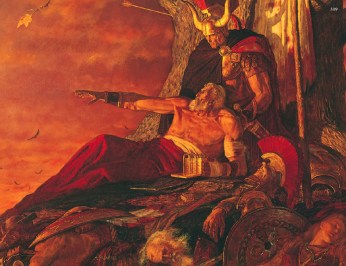 Mormon’s life was a life of war and turmoil. When he was just 15 years of age, he was appointed to be the leader of the Nephite armies being a man large in stature. He witnessed almost the entire destruction of his people who had become wicked and perverse, even more so than had ever been upon the face of the land. He was a man that abhorred the shedding of blood, and hated the thought of war. He was a righteous man and spent his days in the defense of liberty and preaching the word of God to his brethren; although in vain, for they would not hearken unto the promptings of the Holy Spirit.
Several hundreds of years previous to Mormons birth there was a man who we call “Captain Moroni” who was the leader of the Nephite armies during a time of much war between the Lamanites and the Nephites. I assume Mormon admired him a great deal, and must have looked to him as an example of leadership. Like Mormon, he too was a young leader, being only 25 when Moroni was appointed Chief Captain over all the Nephite armies—now this was according to the custom of the Nephites, not so much to be respecters of age, but to appoint someone that had the Spirit of revelation and prophesy to be their leaders (see 3 Nephi 3:19).
After reading what Mormon writes of Captain Moroni, you can decide for yourself if this is whom Mormon’s son Moroni was called after:
“And Moroni was a strong and a mighty man; he was a man of a perfect understanding; yea, a man that did not delight in bloodshed; a man whose soul did joy in the liberty and the freedom of his country, and his brethren from bondage and slavery;
“Yea, a man whose heart did swell with thanksgiving to his God, for the many privileges and blessings which he bestowed upon his people; a man who did labor exceedingly for the welfare and safety of his people.
“Yea, and he was a man who was firm in the faith of Christ, and he had sworn with an oath
to defend his people, his rights, and his country, and his religion, even to the loss of his blood.
“Now the Nephites were taught to defend themselves against their enemies, even to the shedding of blood if it were necessary; yea, and they were also taught never to give an offense, yea, and never to raise the sword except it were against an enemy, except it were to preserve their lives.
“And this was their faith, that by so doing God would prosper them in the land, or in other words, if they were faithful in keeping the commandments of God that he would prosper them in the land; yea, warn them to flee, or to prepare for war, according to their danger;
“And also, that God would make it known unto them whither they should go to defend themselves against their enemies, and by so doing, the Lord would deliver them; and this was the faith of Moroni, and his heart did glory in it; not in the shedding of blood but in doing good, in preserving his people, yea, in keeping the commandments of God, yea, and resisting iniquity.
“Yea, verily, verily I say unto you, if all men had been, and were, and ever would be, like unto Moroni, behold, the very powers of hell would have been shaken forever; yea, the devil would never have power over the hearts of the children of men.
“Behold, he was a man like unto Ammon, the son of Mosiah, yea, and even the other sons of Mosiah, yea, and also Alma and his sons, for they were all men of God” (Alma 48:11-18).
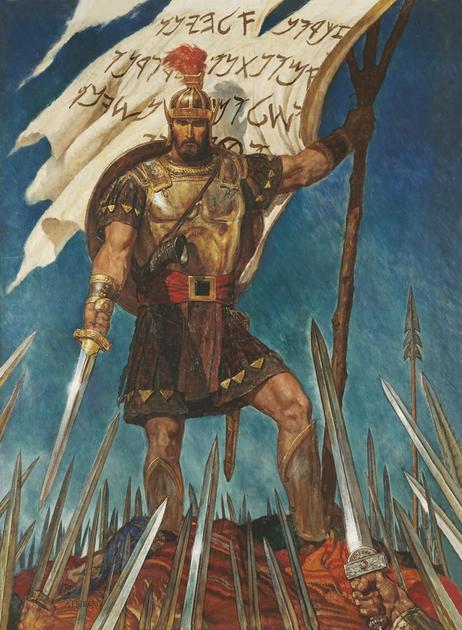
Now, the Alma he mentioned was a contemporary of Captain Moroni. Alma was the prophet when Moroni was growing up. In fact, he respected Alma so much that after he became Chief Captain and needed instruction on what to do, it was Alma that he inquired of for revelation and prophesy. Captain Moroni wasn’t the first Chief Captain to seek Alma’s gifts to be used in matters of war either, for Alma was a highly beloved prophet among all those who loved God (see Alma 43:23-24; see also Alma 16:5-8).
Alma was man of much wisdom. His story is a compelling one, but if Alma were here, he would be the first to tell you that his story doesn’t start with him, but for brevities sake, well start it with his father.
Alma’s father was a very wicked priest of a king named Noah. But when the word of God was delivered to him by the mouth of the prophet Abinadi, he was converted and went forth from that day preaching the words of Abinadi to all who would listen (see Mosiah 17-18). He established a church and baptized thousands of converts at a place called the “Waters of Mormon” (the place of which Mormon himself was named after; see 3 Nephi 5:12). So, just in case you haven’t read the name “Mormon” enough thus far, here is what Mormon said of this event:
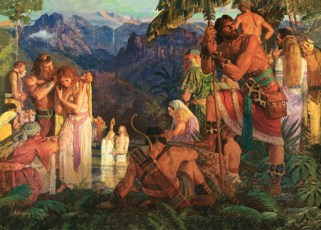 “And now it came to pass that all this was done in Mormon, yea, by the waters of Mormon, in the forest that was near the waters of Mormon; yea, the place of Mormon, the waters of Mormon, the forest of Mormon, how beautiful are they to the eyes of them who there came to the knowledge of their Redeemer; yea, and how blessed are they, for they shall sing to his praise forever” (Mosiah 18:30).
While these wonderful things were going on, those people were caused to flee from the land of Mormon, and were eventually brought into bondage by the Lamanites. After a time, the Lord saw fit to deliver them and they were lead to the City of Zarahemla where they were joyously received by their Nephite brethren. It was there the church was established throughout all the land, and there was continual peace for the space of several years.
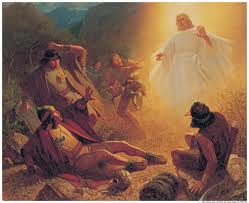
There were many of the rising generation that did not hearken unto the words of God. Unfortunately chief among them was Alma. He went about seeking to destroy the church, and led many away to destruction. While he was going about in this very cause he was visited by an angel and struck almost to death for several days (see Mosiah 27). Many years later Alma recounted his story to his son, and described his quandary thus:
“For I went about with the sons of Mosiah, seeking to destroy the church of God; but behold, God sent his holy angel to stop us by the way.
“And behold, he spake unto us, as it were the voice of thunder, and the whole earth did tremble beneath our feet; and we all fell to the earth, for the fear of the Lord came upon us.
“But behold, the voice said unto me: Arise. And I arose and stood up, and beheld the angel.
“And he said unto me: If thou wilt of thyself be destroyed, seek no more to destroy the church of God.
“And it came to pass that I fell to the earth; and it was for the space of three days and three nights that I could not open my mouth, neither had I the use of my limbs.
“And the angel spake more things unto me, which were heard by my brethren, but I did nothear them; for when I heard the words—If thou wilt be destroyed of thyself, seek no more to destroy the church of God—I was struck with such great fear and amazement lest perhaps I should be destroyed, that I fell to the earth and I did hear no more.
“But I was racked with eternal torment, for my soul was harrowed up to the greatest degree and racked with all my sins.
“Yea, I did remember all my sins and iniquities, for which I was tormented with the pains of hell; yea, I saw that I had rebelled against my God, and that I had not kept his holy commandments.
“Yea, and I had murdered many of his children, or rather led them away unto destruction; yea, and in fine so great had been my iniquities, that the very thought of coming into the presence of my God did rack my soul with inexpressible horror.
“Oh, thought I, that I could be banished and become extinct both soul and body, that I might not be brought to stand in the presence of my God, to be judged of my deeds.
“And now, for three days and for three nights was I racked, even with the pains of a damned soul.
“And it came to pass that as I was thus racked with torment, while I was harrowed up by the memory of my many sins, behold, I remembered also to have heard my father prophesy unto the people concerning the coming of one Jesus Christ, a Son of God, to atone for the sins of the world.
“Now, as my mind caught hold upon this thought, I cried within my heart: O Jesus, thou Son of God,
have mercy on me, who am in the gall of bitterness, and am encircled about by the everlasting chains of death.
“And now, behold, when I thought this, I could remember my pains no more; yea, I was harrowed up by the memory of my sins no more.
“And oh, what joy, and what marvelous light I did behold; yea, my soul was filled with joy as exceeding as was my pain!
“Yea, I say unto you, my son, that there could be nothing so exquisite and so bitter as were my pains. Yea, and again I say unto you, my son, that on the other hand, there can be nothing so exquisite and sweet as was my joy.
“Yea, methought I saw, even as our father Lehi saw, God sitting upon his throne, surrounded with numberless concourses of angels, in the attitude of singing and praising their God; yea, and my soul did long to be there.
“But behold, my limbs did receive their strength again, and I stood upon my feet, and did manifest unto the people that I had been born of God (Alma 36:7-23).
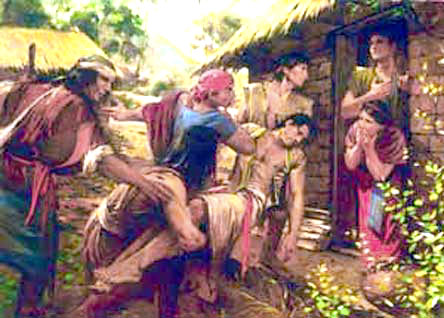
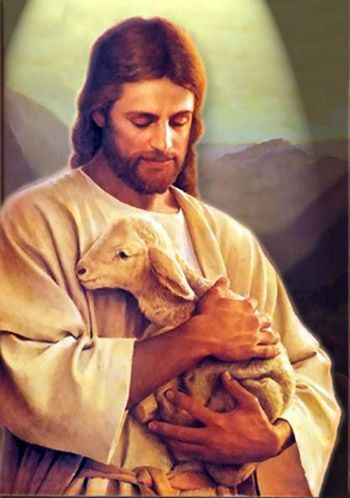
While still in his youth Alma became a very righteous man, and went about throughout all the land repairing the wrongs which he had done, preaching the word of God, and doing much good.
 Before Alma’s father died, he ordained Alma, High Priest over the Church. King Mosiah also being a righteous man desired that the people should be no more ruled by a king and established a new system of government which was to be led by judges who were appointed by the voice of the people. Alma being well-beloved was also appointed to be the first Chief Judge over the people of Nephi.
Alma labored diligently in the judgment seat for several years; but seeing that his people were falling into wickedness, he desired to preach unto them. And so he gave up his judgment seat so that he might be able to devote all his time and attention to his calling as High Priest over the Church and preaching the word of God throughout all the land of the Nephites.
His first address is found in Alma 5, which is why I am here, writing this now.
It is notable that throughout Mormon’s narrated abridgment (139 chapters, spanning the books of Mosiah through 4 Nephi) there are extremely few instances where Mormon chose to keep entire articles intact, unnarrated,  without personal remarks or even conjunctive passages. In all instances—excluding the Savior’s discourses to the Nephites found in 3 Nephi—the author of those articles is Alma. In total, they are made up of one address to a group of people (Alma 5), one personal log (Alma 29), and three admonitions, one to each of his son (comprising Alma 36-42). This may illustrate to the reader the magnitude of respect that Mormon had for the prophet Alma as well.
Archetypical of Alma’s manner of address is the use of many questions, and the mention of captivity and deliverance—primarily of his fathers. As we dive into the first part of Alma 5 in the next entry, look for these things and try and answer his question for yourself.
Perhaps in the meantime, you can read Alma 5 on your own, and start with the question of why Alma was so deaply impressed with captivity and deliverance (see also Alma 9; 29; and 36)?

 Just Another LDS Voice