
 Hey! Welcome to my blog! You can take some time to get to know me by reading posts under the "Who Am I?" category or you can just get started by reading topics you would like to learn about.
In Part 2 we looked introspectively and examined our own standing before the Lord. Recall verse 32, Alma calls us to repentance “for the Lord God hath spoken it!” As we pick up from where we left off Alma describes the disposition of our God and his invitation to us:
“Behold, he sendeth an invitation unto all men, for the arms of mercy are extended towards them, and he saith: Repent, and I will receive you.
“Yea, he saith: Come unto me and ye shall partake of the fruit of the tree of life; yea, ye shall eat and drink of the bread and the waters of life freely” (Alma 5:33-34).
The word “Invite” essentially means to request or call for. So when you see those words, invite, request, or call, use them interchangeably.
 Now, imagine with me for a moment as I take you into an elaborate medieval parable. You have been requested to a celebration feast at the palace; you, a lowly peasant, were called by the King—through his servants of course—who wanted you there so badly he prepared for you all that you would need to be there. At this celebration there is a dress code, to which all of the guests were given at the door a specific garment. (If you have ever read the New Testament, this parable might be sounding vaguely familiar to you by now).
This is our life. We are the peasant’s, God is the King, and the servants are the prophets; the palace represents the presence of God, while the feast represents Eternal Life. What’s with the garment? We’ll get back to that later, for now, let’s just stick with what we got so far. First, God invite’s all to come to the celebration, as he is no respecter of persons, he judgeth not by race, sex, creed, nor social standing; we are all equal in his sight, and as such his love and mercy is extended to everyone. In the celebration all who have entered into the palace are also welcome to the feast, which consists of the fruit of the tree of life, and may partake of the “bread and waters of life freely.” Sounds like a good party.
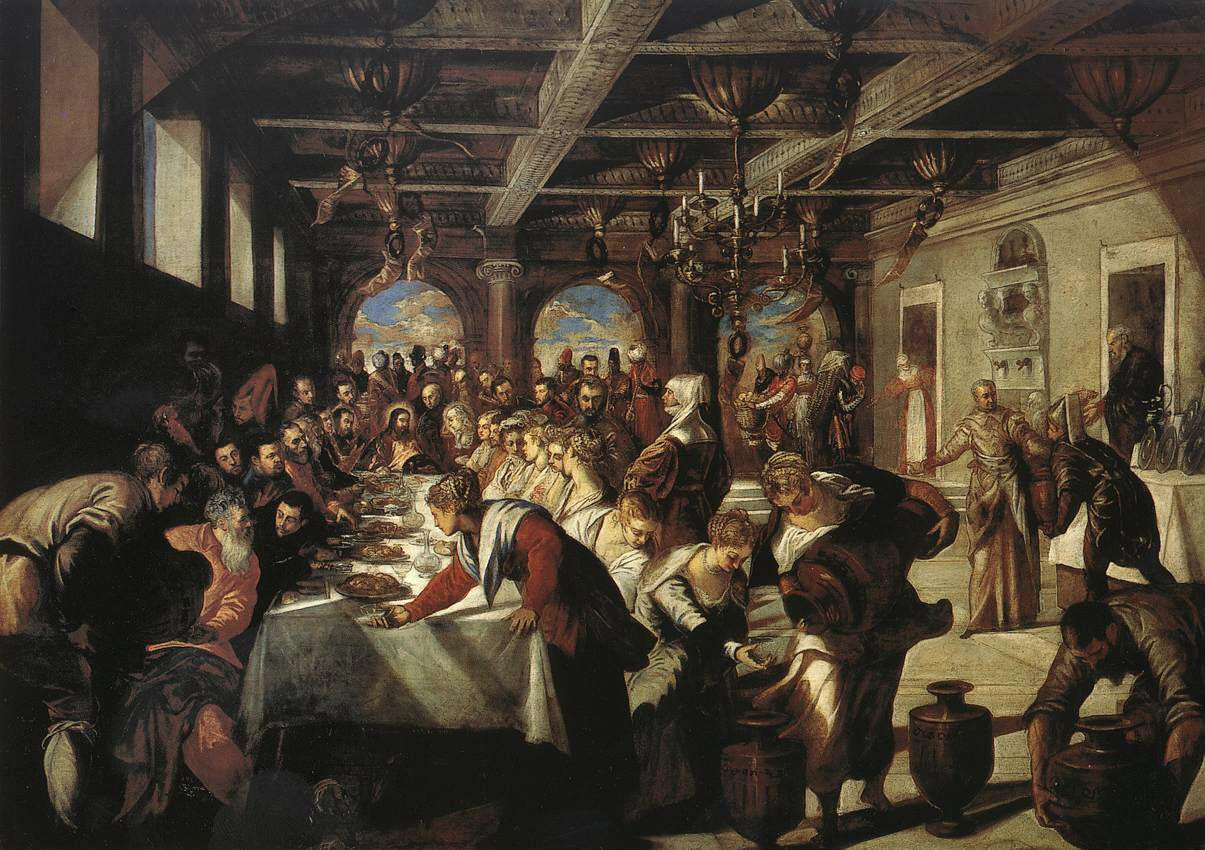 So if everyone is invited, why doesn’t everyone get to partake in the feast? Heck, everyone even comes, yet, still, only a few actually taste of the fruit. What’s the difference between those who partake and those who don’t? Now we can talk about that garment. The invitation was given, but there is also something we must do. We are asked simply to come through the front door and put on the garment, all who do that, are free to partake. So what does the garment represent? That’s repentance. It symbolizes our submission to the King; our alignment with his will. Those who enter through the front door are welcome guests; there were none who were turned away.
Yet there were some who didn’t want to repent, who thought it better to hold on to their sins, and therefore entered in through the back gate, and were found garment-less in the dining hall, though, what foresight they lacked was that no one may partake of the fruit without the garment. It really wouldn’t make sense if you think about it; how could someone so stubborn and selfish feel comfortable in eternity while be surrounded by perfection? How could someone who spent all their days hating and reviling against the will of the King, think that it would be acceptable to dine with him in his presence for all eternity? Hence, repentance is a prerequisite to eternal life. Jesus sums up his parable with the decree of the King on behalf of those who entered in through the back gate:
“Bind him hand and foot, and take him away, and cast him into outer darkness; there shall be weeping and gnashing of teeth.
“For many are called, but few are chosen” (Matthew22:12-14; see Matthew 22:1-14 for the parable of the wedding feast).
Alma continues:
“Yea, come unto me and bring forth works of righteousness, and ye shall not be hewn down and cast into the fire—
“For behold, the time is at hand that whosoever bringeth forth not good fruit, or whosoever doeth not the works of righteousness, the same have cause to wail and mourn” (Alma 5:35-36).
 God in his mercy doesn’t wish any to wail or mourn yet world-wide, Christianity is well known for its doctrine of harsh punishments. To the skeptical outsider, and even to the less-informed insider, it may appear that Christian Doctrine is that of a spiteful God without compassion for the unbeliever; though, the careful student of the Bible will find that this is not the case. Modern Revelation also gives us great insight into God’s nature as found in Moses chapter 7, one of my most favorite passages in all of the Scriptures.
Here we find a very intimate—and quite frankly, a rather emotional—exchange between the prophet Enoch and the God of Heaven and Earth:
“And it came to pass that the God of heaven looked upon the residue of the people, and he wept; and Enoch bore record of it, saying: How is it that the heavens weep, and shed forth their tears as the rain upon the mountains?
“And Enoch said unto the Lord: How is it that thou canst weep, seeing thou art holy, and from all eternity to all eternity?
“And were it possible that man could number the particles of the earth, yea, millions of earths like this, it would not be a beginning to the number of thy creations; and thy curtains are stretched out still; and yet thou art there, and thy bosom is there; and also thou art just; thou art merciful and kind forever;
“And thou hast taken Zion to thine own bosom, from all thy creations, from all eternity to all eternity; and naught but peace, justice, and truth is the habitation of thy throne; and mercy shall go before thy face and have no end; how is it thou canst weep?
“The Lord said unto Enoch: Behold these thy brethren; they are the workmanship of mine own hands, and I gave unto them their knowledge, in the day I created them; and in the Garden of Eden, gave I unto man his agency;
“And unto thy brethren have I said, and also given commandment, that they should love one another, and that they should choose me, their Father; but behold, they are without affection, and they hate their own blood;
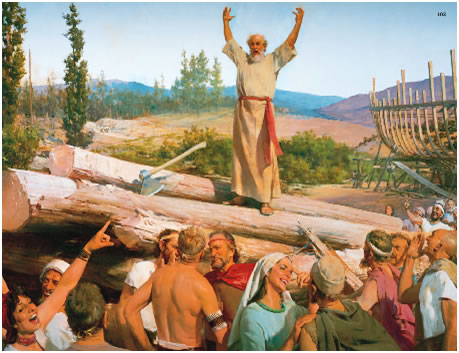
“And the fire of mine indignation is kindled against them; and in my hot displeasure will I send in the floods upon them, for my fierce anger is kindled against them.
“Behold, I am God; Man of Holiness is my name; Man of Counsel is my name; and Endless and Eternal is my name, also.
“Wherefore, I can stretch forth mine hands and hold all the creations which I have made; and mine eye can pierce them also, and among all the workmanship of mine hands there has not been so great wickedness as among thy brethren.
“But behold, their sins shall be upon the heads of their fathers; Satan shall be their father, and misery shall be their doom; and the whole heavens shall weep over them, even all the workmanship of mine hands; wherefore should not the heavens weep, seeing these shall suffer?
“But behold, these which thine eyes are upon shall perish in the floods; and behold, I will shut them up; a prison have I prepared for them.
“And that which I have chosen hath pled before my face. Wherefore, he suffereth for their sins; inasmuch as they will repent in the day that my Chosen shall return unto me, and until that day they shall be in torment;
“Wherefore, for this shall the heavens weep, yea, and all the workmanship of mine hands.
“And it came to pass that the Lord spake unto Enoch, and told Enoch all the doings of the children of men; wherefore Enoch knew, and looked upon their wickedness, and their misery, and wept and stretched forth his arms, and his heart swelled wide as eternity; and his bowels yearned; and all eternity shook” (Moses 7:28-41).
I can’t really express any better than Moses does here the power and magnitude of the compassion, mercy, love and devotion that our Father in Heaven has for his children—us, you and me. It’s really awe-inspiring, and at the same time utterly sad that “because strait is the gate, and narrow is the way, which leadeth unto life” many people will choose misery over God (see Matthew 7:14).
 As we continue on with Alma’s address rather than reading this next section as if Alma were speaking with contempt, or anger, please read this next portion in the context I believe it was delivered—as a pitiful plea, or invitation, to our brothers and sisters who “are without affection.”
“O ye workers of iniquity; ye that are puffed up in the vain things of the world, ye that have professed to have known the ways of righteousness nevertheless have gone astray, as sheep having no shepherd, notwithstanding a shepherd hath called after you and is still calling after you, but ye will not hearken unto his voice!
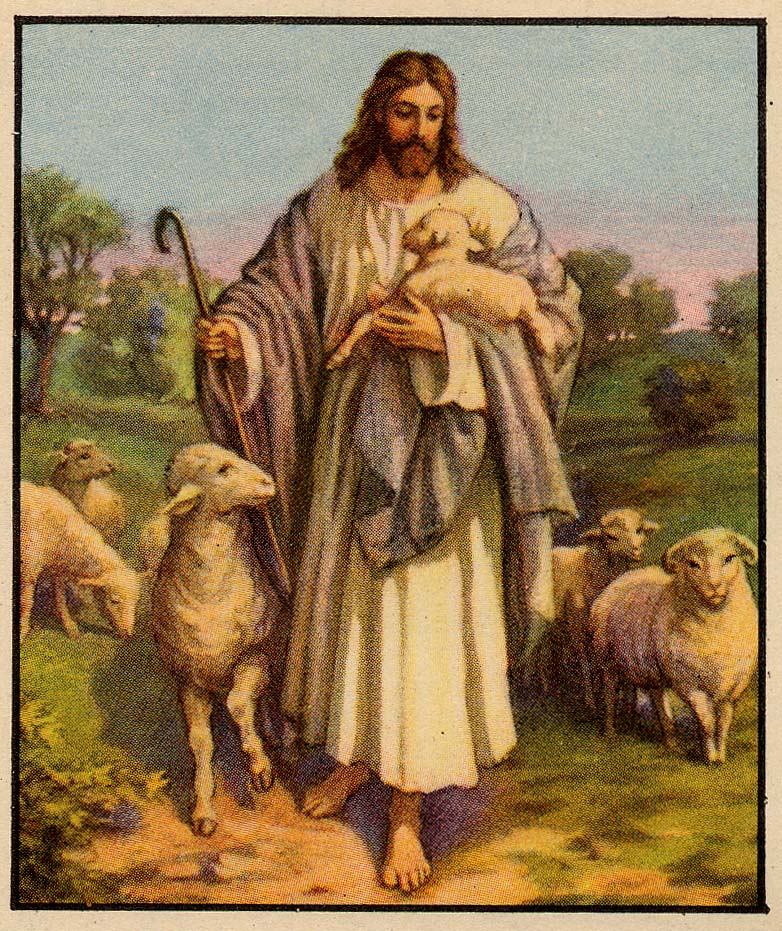 “Behold, I say unto you, that the good shepherd doth call you; yea, and in his own name he doth call you, which is the name of Christ; and if ye will not hearken unto the voice of the good shepherd, to the name by which ye are called, behold, ye are not the sheep of the good shepherd.
“And now if ye are not the sheep of the good shepherd, of what fold are ye? Behold, I say unto you, that the devil is your shepherd, and ye are of his fold; and now, who can deny this? Behold, I say unto you, whosoever denieth this is a liar and a child of the devil.
“For I say unto you that whatsoever is good cometh from God, and whatsoever is evil cometh from the devil.
“Therefore, if a man bringeth forth good works he hearkeneth unto the voice of the good shepherd, and he doth follow him; but whosoever bringeth forth evil works, the same becometh a child of the devil, for he hearkeneth unto his voice, and doth follow him.
“And whosoever doeth this must receive his wages of him; therefore, for his wages he receiveth death, as to things pertaining unto righteousness, being dead unto all good works (Alma 5:37-42).
We are sheep. Christ is the Shepherd. His voice we must follow, lest we find ourselves being led off by another. In the end it’s our choice who we wish to follow, but those choices unequivocally have consequences, if our shepherd is Satan, then our end will be that of misery like our master; if our shepherd is Christ, Eternal happiness—like our Master.

 Just Another LDS Voice