
 Hey! Welcome to my blog! You can take some time to get to know me by reading posts under the "Who Am I?" category or you can just get started by reading topics you would like to learn about.
My heritage is a heritage of perseverance and integrity. I have learned a lot from my forbearers, I know that is God’s plan. He gives us families for our benefit, and one of those benefits is for us to learn from. I have learned so much from my parents and my grandparents. One thing I will always be indebted unto them is for them sharing with me the legacy of faith that I adopted when I was baptized into the Church of Jesus Christ of Latter-Day Saints.
Growing up my life was filled with many blessings, but it was not without adversity or trail. The Lord knew me long before I was ever born here, and He had, and still does have a plan for me, He knew what I needed, and what would help me become the person He wanted me to be. I was born to an LDS family; however, I was raised in the ways of juggling between less-activity and inactivity, the majority being the latter. I was brought up by a loving mother and father, perfect for me, but I was not taught in the ways of Mormonism. I was a normal boy like any other, but I lacked a faith in God and His Son Jesus Christ.
 When I was young, about 5 or 6 years old, I had an experience with my brother that I remember very vividly. We were out getting into mischief and we were messing around on the church parking lot. My brother hurt himself pretty bad and was having a hard time walking for a little bit. Although the injury was insignificant, at the time I was angry. I looked up at the church, and cursed God “How could he let such a thing happen to us at a church?” didn’t he love us? Didn’t he want us to be safe and happy? We were only kids. I thought to myself: “Why didn’t he protect us?”
Mischief continued to be my hobby of choice over the next couple of years. I was in and out of trouble with the law, did poorly in school, and I didn’t pay any mind to God or religion. Luckily for me, my grandparents pointed out to me the path that lead to the iron rod. I stayed with them the summer before my freshmen year of high school. Over the summer they shared many experiences with me of their missions and their faith. When the summer was over they convinced me and committed me to enroll in seminary my freshmen year during release time.
 I had a good enough experience studying the New Testament that year; I decided to go back for another year of seminary. That decision would ultimately change my life forever. That year we studied the Book of Mormon. I was still in my rebellious stage, but as I learned its contents, and I learned from the example of other people, I desired to go to church. I went alone however. I rode my bike most Sundays to the church, and often times I sat by myself. That was very hard to do without much of a support system from my family. But I kept going back nonetheless.
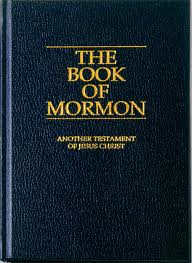 I decided that year to start reading the Book of Mormon for myself. Throughout the process of reading I had many great experiences that helped build my faith. I gained a testimony that God does in fact listen to and answer prayers, I knew that positively. When I finished reading the Book of Mormon the following year I decided to do as Moroni directs, pray to know if the Book of Mormon was true, and if it were true, if He would make it known unto me.
The answer didn’t come right away, and it didn’t come all at once. I had no manifestation of an angel, God did not appear to me in a vision, and no voice whispered in my ear that it was true. But my answer did come. I was given by the spirit a testimony unshakable that the Book of Mormon is true. A testimony no man can take away. The Prophet Joseph Smith once said “A man filled with the love of God, is not content with blessing his family alone, but is anxious to bless the whole human race” (History of the Church, 4:226–27). That is true. Once I partook of the fruit I desired that others might partake of it also. I desired to serve a mission of the Lord. I was broke, and I didn’t want my family or ward to have to pay for my mission. So I made a difficult decision. I would join the Military, save money and serve my country, learn the scriptures and read out of the best books, gain experience and grow in testimony to prepare me for my mission. Little did I know what I was truly getting myself into.
C.S. Lewis once wrote:
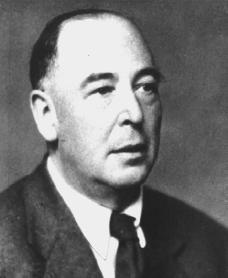 “Little people like you and me, if our prayers are sometimes granted, beyond all hope and probability had better not draw hasty conclusions to our own advantage. If we were stronger, we might be less tenderly treated. If we were brave, we might be sent, with far less help, to defend far more desperate posts in the great battle” [The Efficacy of Prayer, CS Lewis, The World’s Last Night and Other Essays].
My service to my country gave me many opportunities to be less tenderly treated. It was during those five years that the adversary used everything he had to stop me from completing my mission. The trials I went through are not something I would wish upon anyone. When I was serving in Iraq it seemed at times as though I was put through the wine press. I don’t have time, nor is it relevant to share all those trials, but I can tell you that I was truly brought down to the depths of humility. I never felt so alone in my entire life. I had no friends; I had no church, no companion, and worst of all no escape.
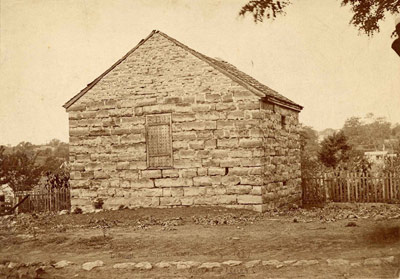 Like my 5 year old self I was left to ask the question “Oh, God, where art thou?” (D&C 121:1). A question the Prophet Joseph Smith asked while a prisoner at Liberty Jail. Sometimes when we are put through the fiery furnace we often can’t see clearly the purposes of God.
Elder D. Todd Christofferson told this story this last General Conference:
“President Hugh B. Brown, formerly a member of the Twelve and a counselor in the First Presidency, provided a personal experience. He told of purchasing a rundown farm in Canada many years ago. As he went about cleaning up and repairing his property, he came across a currant bush that had grown over six feet (1.8 m) high and was yielding no berries, so he pruned it back drastically, leaving only small stumps. Then he saw a drop like a tear on the top of each of these little stumps, as if the currant bush were crying, and thought he heard it say:
“How could you do this to me? I was making such wonderful growth. … And now you have cut me down. Every plant in the garden will look down on me. … How could you do this to me? I thought you were the gardener here.” President Brown replied,
 “Look, little currant bush, I am the gardener here, and I know what I want you to be. I didn’t intend you to be a fruit tree or a shade tree. I want you to be a currant bush, and someday, little currant bush, when you are laden with fruit, you are going to say, ‘Thank you, Mr. Gardener, for loving me enough to cut me down.’”
“Years later, President Brown was a field officer in the Canadian Army serving in England. When a superior officer became a battle casualty, President Brown was in line to be promoted to general, and he was summoned to London. But even though he was fully qualified for the promotion, it was denied him because he was a Mormon. The commanding general said in essence, “You deserve the appointment, but I cannot give it to you.” What President Brown had spent 10 years hoping, praying, and preparing for slipped through his fingers in that moment because of blatant discrimination. Continuing his story, President Brown remembered:
“I got on the train and started back … with a broken heart, with bitterness in my soul. … When I got to my tent, … I threw my cap on the cot. I clenched my fists, and I shook them at heaven. I said, ‘How could you do this to me, God? I have done everything I could do to measure up. There is nothing that I could have done—that I should have done—that I haven’t done. How could you do this to me?’ I was as bitter as gall.
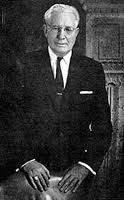 “And then I heard a voice, and I recognized the tone of this voice. It was my own voice, and the voice said, ‘I am the gardener here. I know what I want you to do.’ The bitterness went out of my soul, and I fell on my knees by the cot to ask forgiveness for my ungratefulness. …
“… And now, almost 50 years later, I look up to [God] and say, ‘Thank you, Mr. Gardener, for cutting me down, for loving me enough to hurt me.’”
“God knew what Hugh B. Brown was to become and what was needed for that to happen, and He redirected his course to prepare him for the holy apostleship” [As Many as I Love, I Rebuke and Chasten, D. Todd Christofferson, Ensign, May 2011].
Something I have learned throughout my life is that with great power and great responsibility will come great adversity and trial. If you were to ask any prophet or apostle living or deceased I guarantee you that every single one of them would tell you that at some point in their lives they have stood toe to toe with the adversary. But not just prophets and apostles, all great men and women at some point pass through the fire of tribulation, and when they come out on the other side they emerge stronger, and better prepared to face the demands of life than they were before.
Recently I have been thinking about Mormon Pioneers (the early Latter-day Saints), their suffering makes mine look like a stubbed toe. When the call came to follow the Prophet and gather in Ohio many saints were disowned from their families. Some lost companions and friends. Some sacrificed everything they had to go, and some, already having nothing, still found a way to make the pilgrimage. Brigham Young said of his experience:
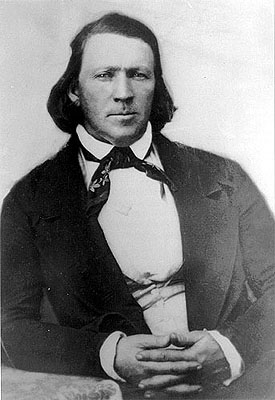 “When we arrived in Kirkland, if any that ever did gather with the saints was any poorer than I was—it was because he had nothing…. I had two children to take care of—that was all. I was a widower. ‘Brother Brigham, had you any shoes?’ ‘No; not a shoe to my foot, except a pair of borrowed boots. I had no winter clothing, except a homemade coat that I had had three or four years.’ ‘Any pantaloons?’ No. ‘What did you do? Did you go without?’ ‘No; I borrowed a pair to wear til I could get another pair. I had traveled and preached and given away every dollar of my property. I was worth little property when I started to preach…. I had traveled and preached until I had nothing left to gather with; but Joseph said: ‘come up;’ and I went up the best I could” (Our Heritage, 24).
Many Saints made great sacrifices to serve missions. Some upon receiving the call had little to no money, food, scriptures, or clothing.
“Elder Erastus Snow being called to the western Pennsylvania Mission wrote “I left Kirtland on foot and alone with a small suitcase containing a few church works and a pair of socks, with five cents in my pocket, being all my worldly wealth.
“Elder John E. Page told the Prophet that he could not accept a call to preach because he was destitute of clothing. He didn’t even have a coat to wear. The Prophet responded by removing his coat and giving it to Elder Page. He told Elder Page to go on his mission and the Lord would bless him abundantly. On this mission, Elder Page was blessed to share the gospel with hundreds of people who joined the Church” (Our Heritage, 32).
Persecuted, the saints hoped for a better tomorrow in Missouri. What they found proved to be a refiner’s fire. In Missouri the saints were almost immediately met with persecution and violence. Some members were threatened, some tarred and feathered, some beaten, some lost property and homes, and some were killed. The Government had forsaken them and the State of Missouri had sided with the mobs and Governor Boggs issued his infamous “extermination order.” The order stated that the Mormons must “be treated as an enemy and exterminated and driven from the state.” needless to say, many saints were massacred, and driven out.
Hardship followed the saints in Nauvoo as well. They were forced to leave Missouri in the middle of a harsh winter. John Harmer tells his story:
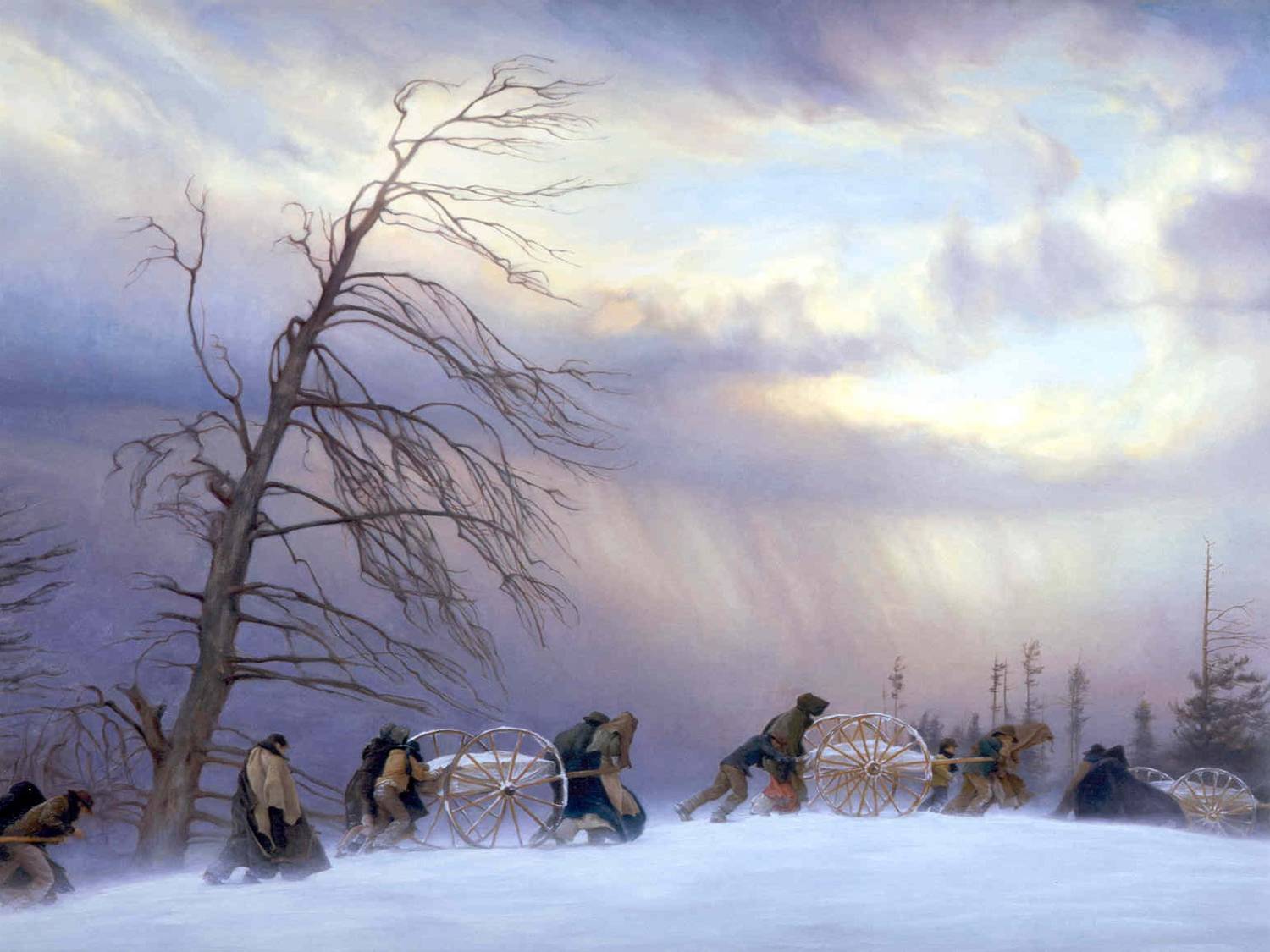 “Well do I remember the sufferings and cruelties of those days…. Our family had one wagon, and one blind horse was all we possessed toward a team, and that one blind horse had to transport our effects to the State of Illinois. Into this small wagon we placed our clothes, bedding some corn meal and what scanty provisions we could muster, and started out into the cold and frost to travel on foot, to eat and sleep by the wayside with the canopy of heaven for a covering. But the biting frosts of those nights and piercing winds were less barbarous and pitiful that the demons in human form whose fury we fled…. Our family, as well as others, were almost bare-footed, and some had to wrap their feet in cloths in order to keep them from freezing and protect them from the sharp points of the frozen ground. This, at best, was imperfect protection, and often the blood from our feet marked the frozen earth” (Our Heritage, 54).
That first summer in Nauvoo took the lives of many saints suffering from disease and hardship. Many more missionaries were called during this era as well. Many left their families sick in their beds to preach the gospel of Jesus Christ to those in their fields of labor they were called to serve. They did so with the words of Christ in their heart “…No man, having put his hand to the plough, and looking back, is fit for the kingdom of God” (Luke 9:62). It wasn’t too many years later that the Prophet and his brother Hyrum were falsely accused and called to Carthage Jail where they were murdered in cold blood by an angry conspiring mob, and the Saints were driven again, this time they would look to go west to the Rocky Mountains.
Those travelling by Handcart felt the worst of it. Many of those of the Martin Handcart Company suffered death in the early winter.
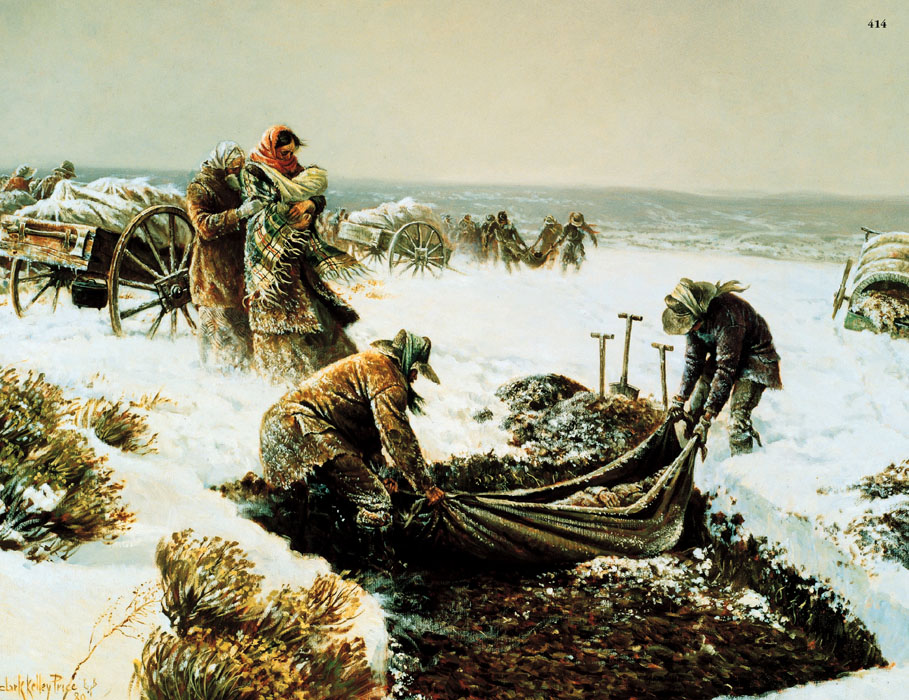 “A man who crossed the plains in the Martin Handcart Company lived in Utah for many years. One day he was in a group of people who began sharply criticizing the Church leaders for ever allowing the Saints to cross the plains with no more supplies or protection than a handcart company provided. The old man listened until he could stand no more; then he arose and said with great emotion:
“I was in that company and my wife was in it…. We suffered beyond anything you can imagine and many died of exposure and starvation, but did you ever hear a survivor of that company utter a word of criticism?…. [We] came through with the absolute knowledge that God lives for we became acquainted with him in our extremities.
“I have pulled my handcart when I was so weak and weary from illness and lack of food that I could hardly put one foot ahead of the other. I have looked ahead and seen a patch of sand or a hill slope and I have said, I can go only that far and there I must give up, for I cannot pull the load through it…. I have gone on to that sand and when I reached it, the cart began pushing me. I have looked back many times to see who was pushing my cart, but my eyes saw no one. I knew then that the angles of God were there.
“Was I sorry that I chose to come by handcart? No, neither then or any minute of my life since. The price we paid to become acquainted with God was a privilege to pay, and I am thankful that I was privileged to come in the Martin Handcart Company” (Our Heritage, 82-84).
 Not too long after arriving in the Salt Lake Valley President Brigham Young thrust his staff into the vacant ground and declared “Here we shall build a temple to our God” (As quoted by Heber J. Grant, in Conference Report, Apr. 1921, 211; see also Wilford Woodruff, in The Utah Pioneers (1880), 23). That statement has new meaning to me now. Since I was called to serve a mission to these Eastern States I have learned much, and I have come to view things under a new light in which I see a little clearer the Lord’s purposes for me and for those of whom He has given me stewardship.
Brothers and Sister, “Here we shall build a temple to our God.” I don’t mean physically in any location where you might reside. I mean hear, now; in your heart, and in my heart. We must build a fortress of testimony inside ourselves as solid as the Salt Lake Temple, even as solid as the rock of Christ. We must let God build us and never give up.
We must be a temple and an ensign to the world. We must be an example of the believers (see 1 Timothy 4:12), and walk and never faint; when fierce winds become our enemy, we do not turn back, but we press forward, when Satan comes knocking at our doors, we do not cower, but we put on the armor of God and we fight back. We, by our nature and our linage are tough, and we are winners. We have inherited a legacy of faith from our Mormon ancestors. And we have inherited a royal birthright from our Father in Heaven. As President Ezra Taft Benson put it:
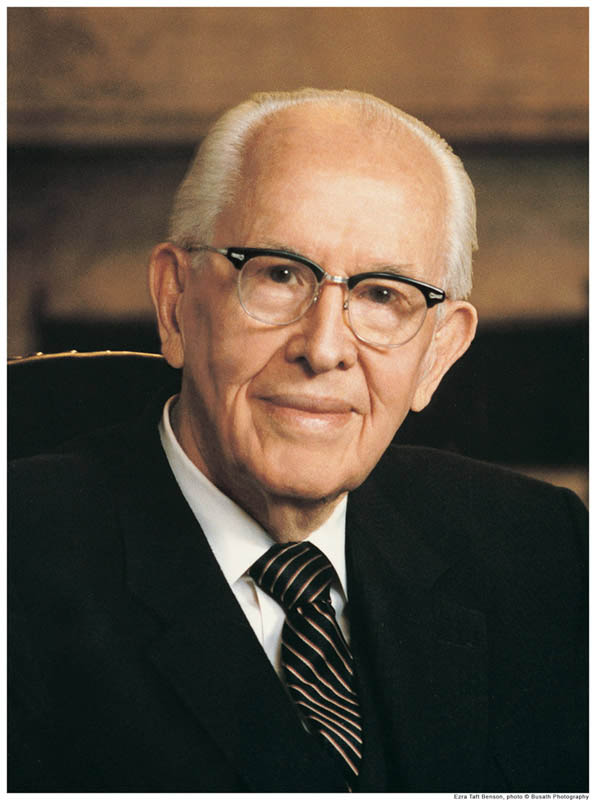 “You have been born at this time for a sacred and glorious purpose. It is not by chance that you have been reserved to come to earth in this last dispensation of the fullness of times. Your birth at this particular time was foreordained in the eternities.
“You are to be the royal army of the Lord in the last days. You are ‘youth of the noble birthright’” [To the ‘Youth of the Noble Birthright,’ Ezra Taft Benson, Ensign, May 1986, 43; emphasis added]
The Lord is preparing those around us, just as he has been preparing us. We must open our mouths and declare the living gospel to those who are without. If we are not doing everything we can to do our part, President Spencer W. Kimball said it best in his prophetic address “We must lengthen our stride” (“When the World Will Be Converted,” Ensign, Oct. 1974, p. 5).
The Prophet Joseph prophesied of our time:
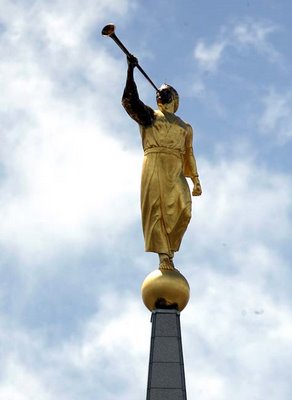 “…the Standard of Truth has been erected; no unhallowed hand can stop the work from progressing; persecutions may rage, mobs may combine, armies may assemble, calumny may defame, but the truth of God will go forth boldly, nobly, and independent, till it has penetrated every continent, visited every clime, swept every country, and sounded in every ear, till the purposes of God shall be accomplished and the Great Jehovah shall say the work is done” (History of the Church, 4: 540).
If we are to accomplish that task we cannot sit around and watch, we have to stand up and let His light shine through us. But the Adversary isn’t going to make it easy on us.
So for that reason; no, it is not easy, nor will it ever be, nor is it supposed to be. Elder Holland shares with us his thoughts on why:
 “I am convinced that missionary work is not easy because salvation is not a cheap experience. Salvation never was easy. We are The Church of Jesus Christ, this is the truth, and He is our Great Eternal Head. How could we believe it would be easy for us when it was never, ever easy for Him? It seems to me that [members and missionaries] have to spend at least a few moments in Gethsemane. [Members and missionaries] have to take at least a step or two toward the summit of Calvary.
“Now, please don’t misunderstand. I’m not talking about anything anywhere near what Christ experienced. That would be presumptuous and sacrilegious. But I believe that missionaries and investigators, to come to the truth, to come to salvation, to know something of this price that has been paid, will have to pay a token of that same price.
“For that reason I don’t believe missionary work has ever been easy, nor that conversion is, nor that retention is, nor that continued faithfulness is. I believe it is supposed to require some effort, something from the depths of our soul.
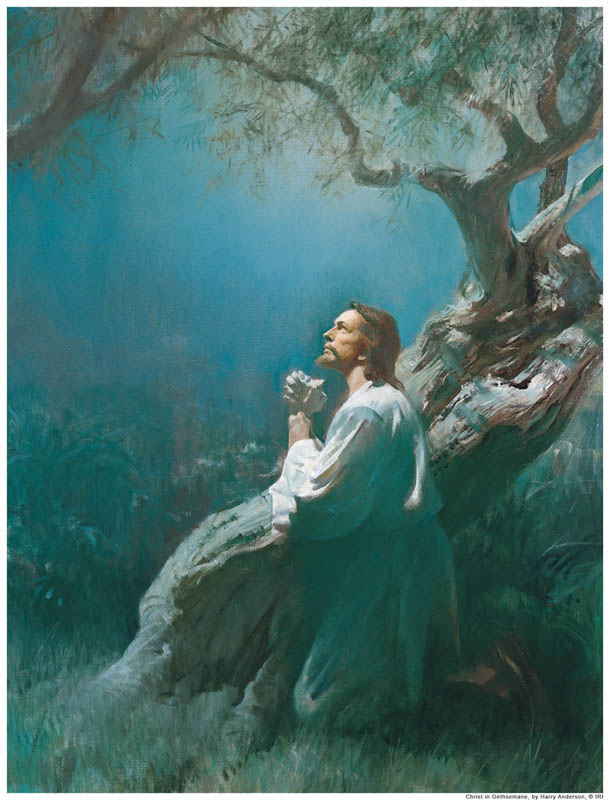 “If He could come forward in the night, kneel down, fall on His face, bleed from every pore, and cry, “Abba, Father (Papa), if this cup can pass, let it pass,”then little wonder that salvation is not a whimsical or easy thing for us. If you wonder if there isn’t an easier way, you should remember you are not the first one to ask that. Someone a lot greater and a lot grander asked a long time ago if there wasn’t an easier way.
“The Atonement will carry the missionaries perhaps even more importantly than it will carry the investigators. When you struggle, when you are rejected, when you are spit upon and cast out and made a hiss and a byword, you are standing with the best life this world has ever known, the only pure and perfect life ever lived. You have reason to stand tall and be grateful that the Living Son of the Living God knows all about your sorrows and afflictions. The only way to salvation is through Gethsemane and on to Calvary. The only way to eternity is through Him—the Way, the Truth, and the Life” [Missionary Work and the Atonement, Jeffrey R. Holland, Ensign, March 2001].
So why did so many of the early saints suffer, why were so many permitted to die young, leaving some widowed and fatherless? To answer simply, it was because God loves them. Why did they endure it? Because they were as you are, the noble and great ones, a royal army of the Lord. Because through it they became acquainted with Him, and they had a sure testimony that Joseph Smith was his prophet and Brigham after him.
Why did I endure what I did? Because I know that my Redeemer lives, and I know that Joseph was His prophet, and Thomas S. Monson is now. And I am thankful every day that I have endured what I did, because through it I became acquainted with my God.
The Lord hasn’t forgotten you, and he hasn’t forgotten me, and he hasn’t forgotten those who are to your left and to your right, your family, your friends, your neighbors and even those who call themselves your enemies.
Doctrine and Covenants 128:24 states:
“For he is like a refiner’s fire, and like fuller’s soap; and he shall sit as a refiner and purifier of silver, and he shall purify the sons of Levi, and purge them as gold and silver, that they may offer unto the Lord an offering in righteousness” (D&C 128:24).
Reading this scripture we are to understand that Christ shall sit and refine us as silver. But how is silver refined and purified? I find the answer best illustrated in a story I heard long ago.
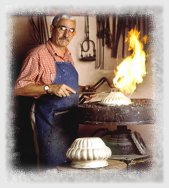 “Perplexed by this question, a woman came to the conclusion that she must visit a silversmith to inquire on the subject. Without telling the object of her inquisition she asked the smith about the process of refining silver, which he fully described to her.
“She then asked: “Do you sit while the work of refining is going on?”
“Oh, yes madam,” replied the silversmith,
“I must sit with my eyes steadily fixed on the furnace, for if the time necessary for refining be exceeded in the slightest degree, the silver will be injured.”
“Then the silversmith explained; the only way he knew when the process of purifying was complete, was by seeing his own image in the reflection of the silver” [Author Unknown].
It isn’t hard because the Lord wants to punish us, but so he can purify His followers of all ungodliness. The Worth of every soul is great in the eyes of God and He has His eye fixed steadily upon each and every one of us. His purpose is to find His image in us. He loves you. He loves those around you, and desires their salvation. The Prophet Joseph Smith said of missionary work:
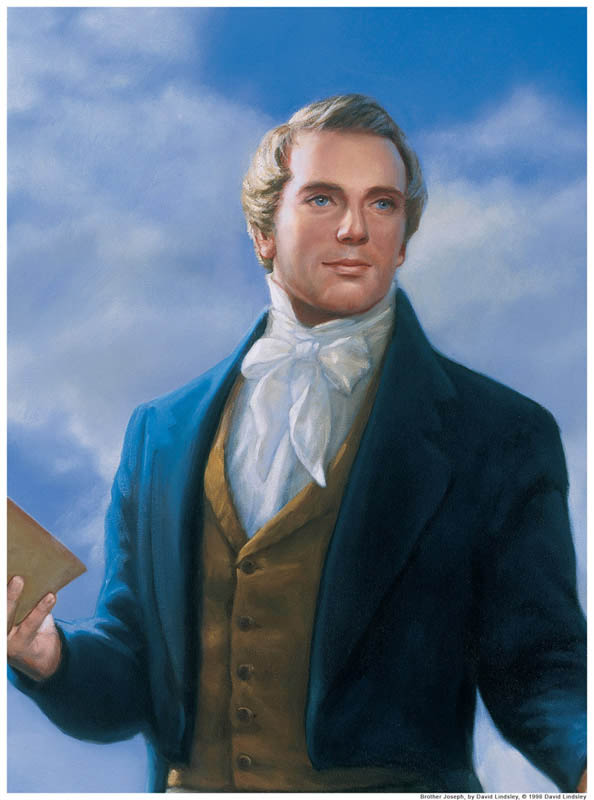 “After all that has been said; the greatest and most important duty is to preach the gospel” (Teachings of the Prophet Joseph Smith, sel. Joseph Fielding Smith [1976], 113).
Brothers and sisters, I know this church is true. I know that it is “[God’s] work and glory to bring to pass the immortality and eternal life of man” (Moses 1:39). I know that the Book of Mormon is true and that it changes lives. I know this this Restored Gospel is true and that it is the doctorine of Christ, and the only true doctrine of the Father, and it did “cost the best blood of the nineteenth century” (D&C 135:6).
There will always be opposition. We must go on. We will go on. Why? Because it is our heritage to go on. We will never give up, because our Father hasn’t given up. I take comfort in, and leave you with this promise from the Lord: “Peace be unto thy soul; thine adversity and thine afflictions shall be but a small moment; and then, if thou endure it well, God shall exalt thee on high” (D&C 121:7-8).

 Just Another LDS Voice